
Alexa vs Google Home: Which Smart Assistant Is Better for You?

Smart assistants have become the control centers of modern homes—managing music, answering questions, automating lights, and keeping our schedules on track.  Two names dominate this space: Alexa from Amazon and…
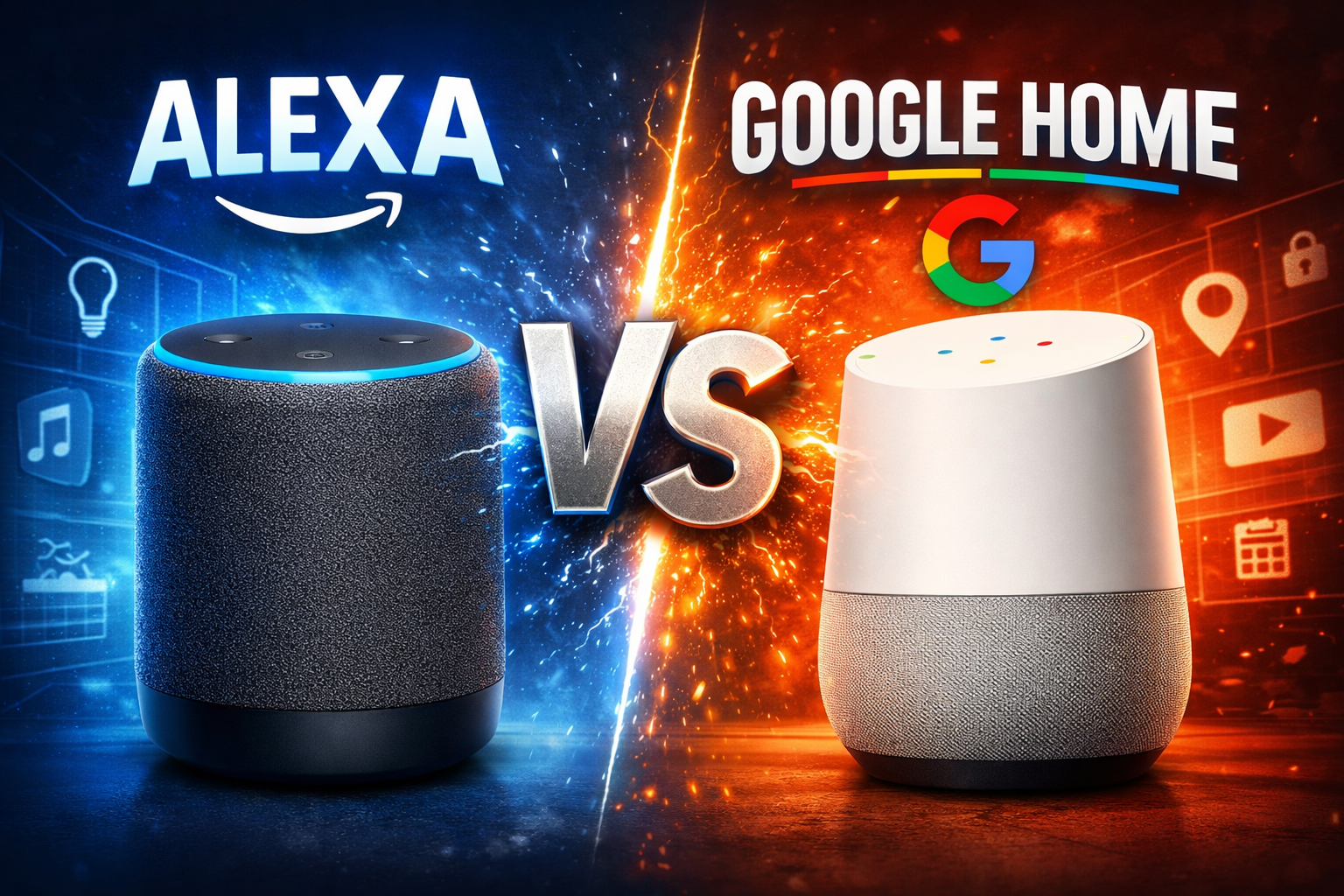
Alexa Vs Google Home

Smart assistants have become the control centers of modern homes—managing music, answering questions, automating lights, and keeping our schedules on track. 

Two names dominate this space: Alexa from Amazon and Google Home, powered by Google Assistant from Google.

But which one is actually better for you? Let’s break it down in plain English so you can confidently choose the right smart assistant for your lifestyle.

Overview: Alexa vs Google Home

Both Alexa and Google Home offer voice control, smart home integration, and access to thousands of apps or “skills.” The difference lies in how they do it—and what they do best.

Feature Alexa Google Home

Best for

Smart hone devices

Voice accuracy 

Ecosystem

Learning curve

Smart home control & customization

Massive compatibility

Good

Amazon shopping & Echo devices

Slightly steeper

Search, facts & natural conversation

Excellent, but slightly fewer

Excellent

Google services & Android

Very beginner-friendly

Alexa: Best for Smart Homes & Customization

Alexa shines when it comes to smart home control. It works with an enormous range of third-party devices—lights, thermostats, plugs, locks, and more.

Pros of Alexa

  • Works with more smart home brands than any competitor

  • Highly customizable with Alexa Skills

  • Great for multi-room audio with Echo devices

  • Seamless Amazon shopping and delivery tracking

Cons of Alexa

  • Occasionally less accurate with complex questions

  • Skills quality can vary

  • Feels more command-based than conversational

👉 Choose Alexa if you’re building a serious smart home setup or already invested in Amazon Echo devices.

Google Home: Best for Answers & Everyday Use

Google Home excels at understanding context and answering questions accurately. Thanks to Google’s search engine, it often provides faster and more precise answers than Alexa.

Pros of Google Home

  • Superior voice recognition and natural conversation

  • Best-in-class search results and fact-based answers

  • Seamless integration with Gmail, Google Calendar, Maps, and YouTube

  • Ideal for households with Android phones

Cons of Google Home

  • Slightly fewer smart home integrations than Alexa

  • Less customization compared to Alexa Skills

  • Shopping features are not as robust

👉 Choose Google Home if you value accurate answers, reminders, and hands-free help with daily life.

Smart Home Compatibility: A Close Race

If your main goal is controlling devices, Alexa still has the edge due to its massive compatibility list. However, Google Home has narrowed the gap significantly and works flawlessly with major brands like Philips Hue, Nest, and TP-Link.

Power users: Alexa
Casual users: Google Home

Privacy & Security

Both platforms offer:

  • Mute buttons for microphones

  • Voice recording controls

  • App-based privacy dashboards

Google is often praised for clearer privacy explanations, while Amazon provides deeper control options for advanced users.

Price & Device Options

Both Alexa and Google Home devices are affordable and frequently discounted.

  • Entry-level speakers often start under $50

  • Smart displays range from $70–$150

  • Sound quality improves significantly with mid-range models

Price alone usually isn’t the deciding factor—it’s the ecosystem that matters more.

Final Verdict: Which Smart Assistant Is Better?

There’s no universal winner—only the right choice for you.

Go with Alexa if you:

  • Want maximum smart home flexibility

  • Love customizing routines and commands

  • Use Amazon services frequently

Go with Google Home if you:

  • Want the smartest answers and best voice recognition

  • Use Android or Google services daily

  • Prefer a more natural, conversational assistant

Bottom Line

Both Alexa and Google Home are excellent smart assistants. The best one is the one that fits seamlessly into your existing tech ecosystem and daily habits.

👉 Tip: If you’re still unsure, start with an entry-level device—they’re affordable, powerful, and easy to upgrade later.